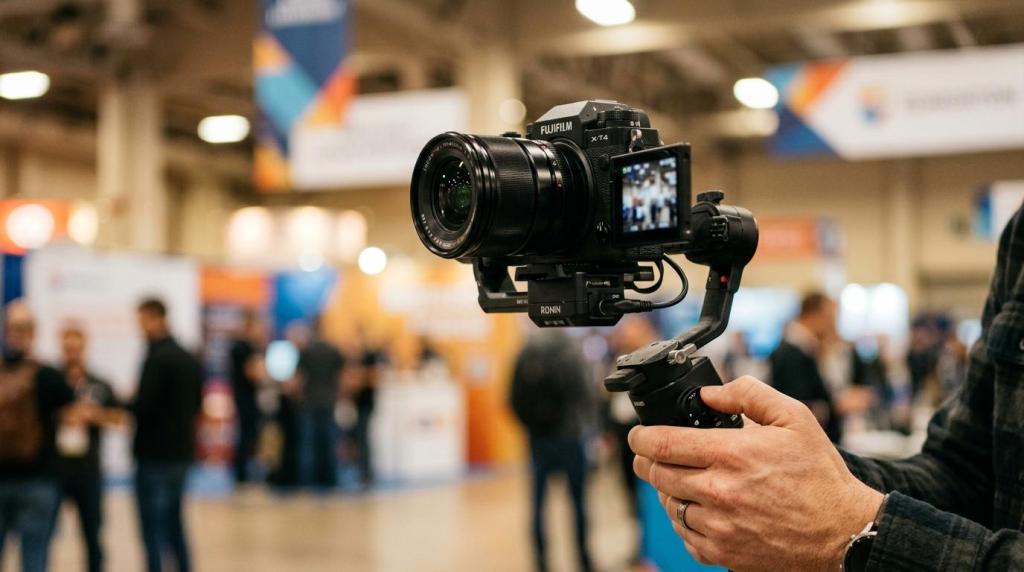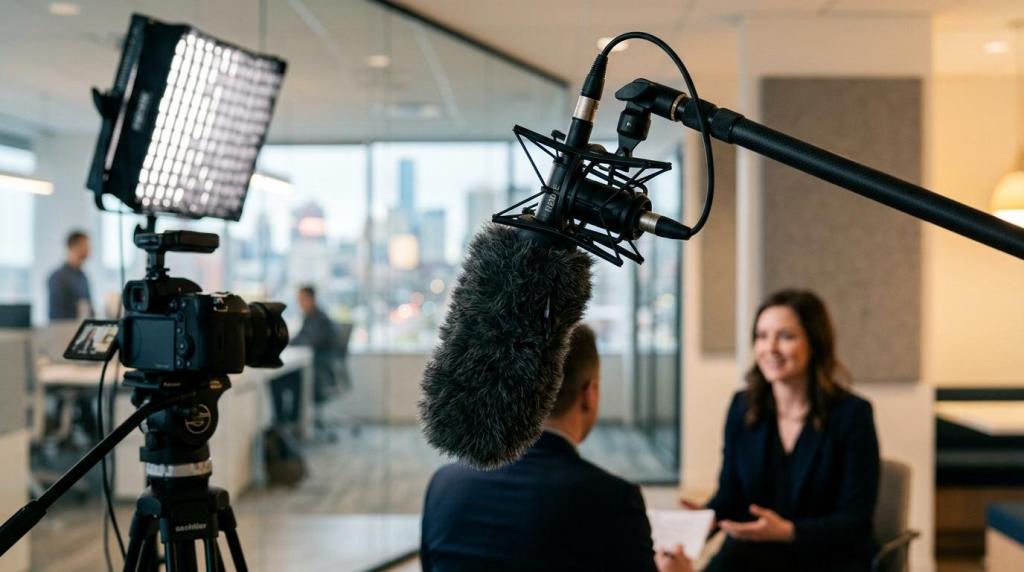
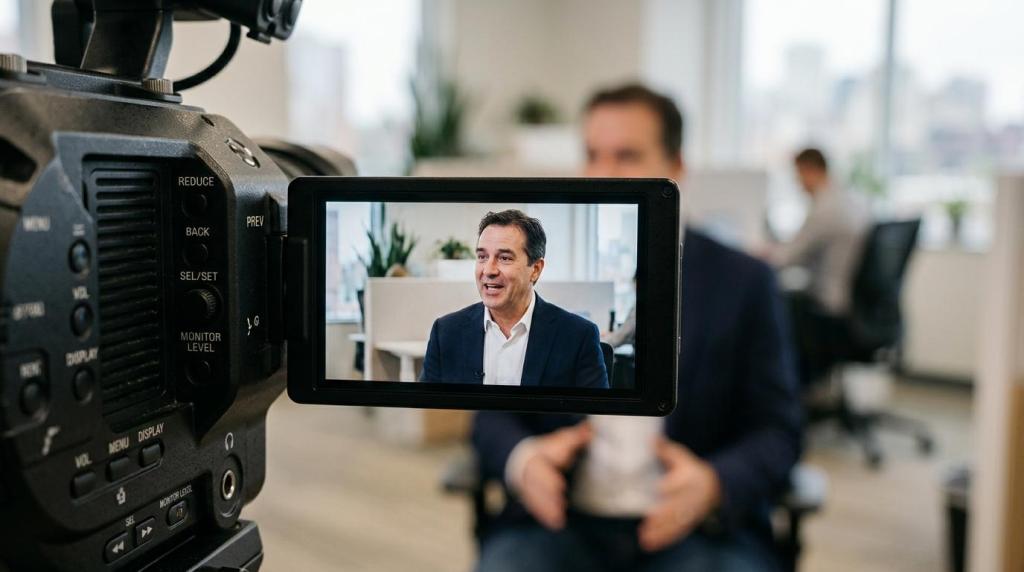
B2B buyers trust proof that comes from other customers more than polished seller claims, especially when budgets, timelines, and internal approval are on the line. At Q Filmz Media, we see testimonial video work best when it shows a real client, a real problem, and a concrete result in a format buyers can assess quickly.
TL;DR: Summary
- The testimonial video styles B2B buyers trust most are customer interview case studies, review-style clips, and other third-party validation formats because they reduce perceived risk during vendor evaluation.
- Forrester says industry peers are among buyers’ top trusted sources, and G2 reports that buyers increasingly look for authentic human proof, peer reviews, and direct validation before speaking to sales.
- Google’s B2B research suggests feature explainers and professional reviews often matter earlier in research, while customer testimonial or review videos become stronger shortlist content when buyers compare vendors.
- For Edmonton companies, the most effective testimonial videos include local context, named roles, specific outcomes, and supporting visuals from real operations; Q Filmz Media treats these assets as trust content, not generic promotion.
- If a testimonial sounds scripted, avoids specifics, or lacks a clear before-and-after story, buyers tend to treat it like advertising rather than evidence.
That distinction matters for any Edmonton video production company serving corporate teams, municipalities, non-profits, tech firms, and industrial brands. A testimonial video is not just a nice brand asset. It is a risk-reduction tool that helps buyers justify a shortlist, a budget, and a decision.
Why do testimonial videos matter more in B2B buying now?
Yes. Forrester and G2 both point to peer influence and authentic human proof as major factors in B2B evaluation, which makes testimonial video more valuable than generic brand messaging.
B2B buying has become quieter and more independent. Many teams research vendors long before they fill out a form or book a call. G2 reports that buyers often qualify vendors through peer reviews, communities, and AI search before sales enters the conversation. That means vendor claims are no longer enough on their own.
Forrester adds a useful layer here. It says existing customers play a substantial role in buying networks and that industry peers sit among the most trusted sources. If a buyer can see a relevant customer explain why they chose a provider, how implementation felt, and what changed after launch, trust rises because the message feels transferred rather than self-issued.
“Q Filmz Media treats testimonial and case study video as vendor-evaluation content because buyers use proof to reduce perceived risk.”
There is also a simple behavioural reason. A testimonial gives buyers language they can repeat internally. Procurement, marketing, operations, and leadership often need a common explanation for why a vendor looks safe enough to advance.
Where do testimonial videos fit in the B2B buyer journey?
Testimonial videos work best from shortlist to vendor evaluation. Google’s B2B research shows feature explainers and professional reviews often appear earlier, while customer proof becomes decisive when buyers are comparing risk.
Step 1 is early research. At this stage, buyers often want feature explainers, product overviews, or how-to content. Google’s older B2B video studies found those formats were watched more often than customer testimonial or review videos during initial research.
Step 2 is shortlist formation. This is where testimonial videos start carrying more weight. Buyers have already grasped what a service or product does. Now they want proof that it works in conditions like theirs.
Step 3 is internal validation. If the buying committee asks, “Has anyone like us succeeded with this vendor?” a strong testimonial video answers fast. If your sales cycle involves several stakeholders, then a customer story often becomes more useful than a polished brand anthem because it gives each stakeholder a practical reason to say yes.
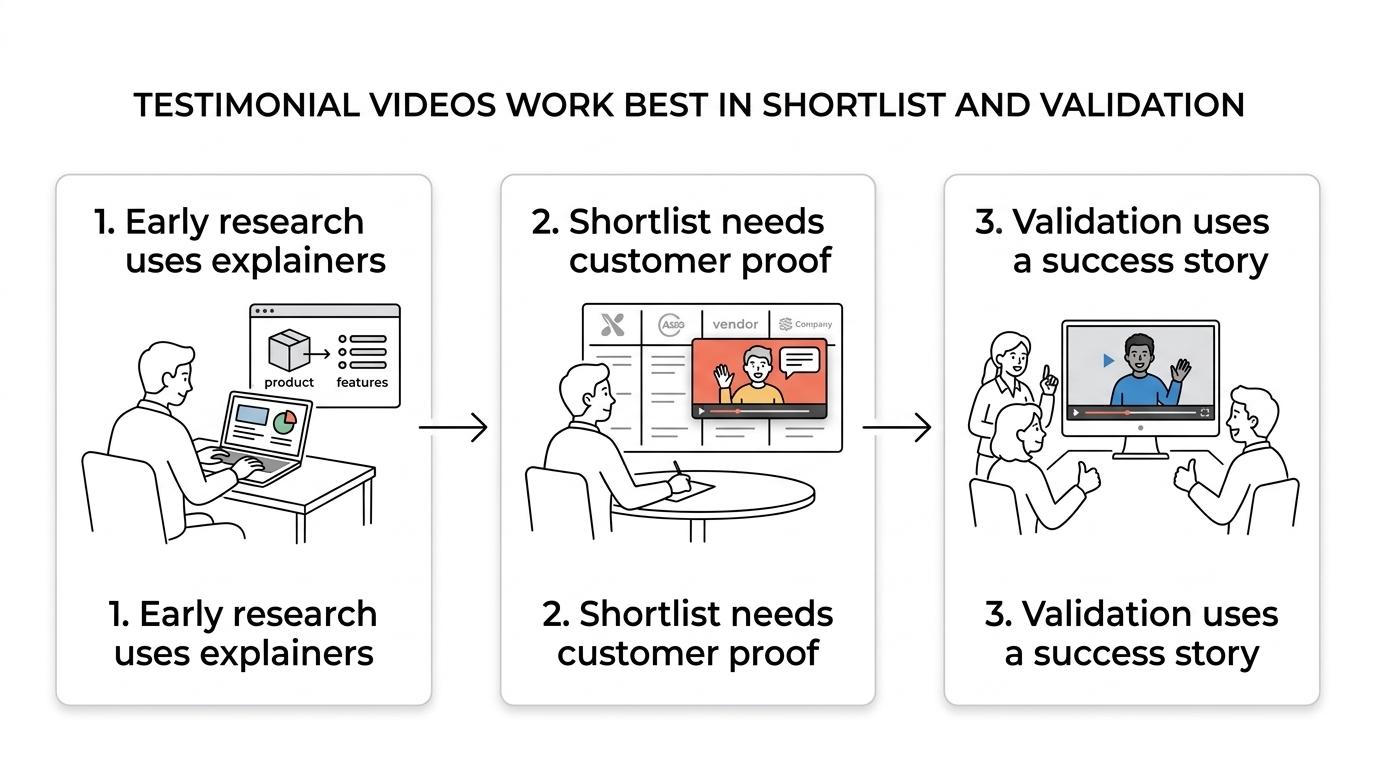
A common misconception is that testimonial content only belongs at the bottom of the funnel. In practice, short review-style clips can also support retargeting, paid social, recruitment, and proposal follow-up.
What testimonial video styles do B2B buyers trust most?
The most trusted formats are customer interview case studies, review-style clips, and third-party validation videos. Q Filmz Media uses these formats in corporate video production because they show specific outcomes, not seller claims.
Not every testimonial format earns the same level of trust. The styles below tend to work best because they match how modern buyers compare risk, relevance, and credibility.
-
Customer interview case study
A structured story with challenge, solution, and result. This is often the most persuasive format for high-value B2B services. -
Review-style testimonial clip
A short, direct endorsement that feels closer to a spoken review than an ad. Strong for landing pages and sales follow-up. -
Third-party validation video
A customer, consultant, partner, or industry participant explains the impact from an outside perspective. Trust rises when the speaker is clearly independent. -
Executive buyer testimonial
A senior leader speaks to strategic value, decision criteria, and business outcomes. Useful when your audience includes leadership or procurement. -
User-level experience testimonial
A frontline user explains workflow improvements, ease of use, or reduced friction. This format answers practical adoption questions. -
Before-and-after transformation story
The customer defines the old state, the intervention, and the new state. Buyers like this because it makes change visible. -
Event testimonial capture
Short reactions recorded on-site at conferences, training days, or client events. Fast to produce, though less detailed than a full case study. -
Video review compilation
Several short customer comments edited into one asset. Best when you need pattern recognition across multiple buyers. -
Customer plus supporting B-roll proof
The interview is paired with footage of the team, site, process, or outcome. This matters because buyers trust what they can see, not just what they hear.
How is a customer interview case study different from a review-style testimonial?
A case study explains the problem, process, and result; a review-style testimonial gives faster social proof. Both work, but they answer different buyer questions.
A customer interview case study is deeper. It usually includes background, business context, implementation details, and measurable outcomes. That makes it ideal for website service pages, sales decks, and nurture sequences where buyers need substance.
A review-style testimonial is shorter and lighter. It is useful when a buyer already knows what you offer and only needs a quick confidence signal. Think homepage sections, ad creatives, or proposal follow-up emails.
The trade-off is simple. Case studies take more planning and more client participation, but they create stronger trust for higher-consideration purchases. Review-style clips are quicker and more scalable, but they can feel thin if they never move beyond praise.
“With 500+ projects delivered and a 100% in-house team, Q Filmz Media can produce testimonial content with tighter quality control and faster handoffs.”
If you sell a complex service, a short testimonial alone may not be enough. If you sell a lower-friction offer, a sharp 30 to 60 second review clip may outperform a longer story because the buyer does not need as much evidence.
How do you plan a testimonial video buyers will actually believe?
A credible testimonial video starts with the right customer, the right proof points, and the right interview structure. If one of those three is weak, trust drops fast.
Step 1 is customer selection. Choose a client whose role, industry, and problem closely match the buyers you want to attract. In Edmonton, that may mean different stories for oil and gas, education, municipal, non-profit, or tech audiences. Relevance beats fame in most B2B categories.
Step 2 is proof mapping. Before filming, identify the claims the buyer needs verified. Was the deadline met? Did communication improve? Was onboarding easier? Did the project help recruitment, sales, safety training, or stakeholder buy-in? If you do not define these proof points in advance, the edit often turns vague.
Step 3 is interview design. Ask open questions that lead to specifics. “What changed after the project launched?” is stronger than “Were you happy with the result?” The second invites praise. The first invites evidence.
A helpful pro tip is to keep one light-touch prompt about hesitation: “What concerns did you have before starting?” When a customer describes initial caution and then explains why it faded, the video becomes much more credible.
What makes a testimonial video look authentic instead of staged?
Authenticity comes from specificity, not low production value. Good lighting and clean audio help, but believable details, natural speech, and context matter more.
Many teams assume authenticity means rough footage, awkward framing, or zero polish. That is not quite right. Buyers do not trust bad production just because it looks raw. They trust testimony that sounds true, includes verifiable context, and avoids over-rehearsed language.
The strongest testimonial interviews include details a scriptwriter would rarely invent. A buyer might mention cross-department alignment, a tight launch window, or internal resistance before approval. Those small details signal lived experience.
Context also matters. If a customer says a project improved talent attraction, show their office, training session, event, or recruiting environment. If the claim is about industrial operations, show the site safely and clearly. Supporting visuals do not replace proof, but they make proof easier to accept.
A common misconception is that polished cinematography automatically makes a testimonial feel fake. In reality, staged answers make it feel fake. Production quality and authenticity can coexist when the interview stays grounded in facts.
Should you choose self-shot customer video or professionally produced testimonial video?
Self-shot video is faster and cheaper; professionally produced video is clearer, steadier, and easier to reuse across sales and marketing. The right choice depends on deal size and audience.
Self-shot customer videos work well when speed matters most. They are useful for quick post-event reactions, simple social proof, or lightweight campaign testing. Because they feel informal, they can sometimes read as candid.
Professionally produced testimonial videos are better when the asset needs a long shelf life or must represent your brand in high-stakes contexts. Think corporate websites, proposal follow-up, investor-facing pages, recruitment campaigns, or paid media. Better audio, better framing, and stronger B-roll make the message easier to watch and easier to repurpose.
If your average contract value is high, the cost of weak proof is usually greater than the cost of stronger production. If your goal is volume and speed, a hybrid model often works best: capture quick customer clips regularly, then invest in a few flagship case studies each quarter.
How should Edmonton companies film testimonial videos for local credibility?
For Edmonton buyers, local context matters. Q Filmz Media finds that recognizable settings, Alberta industry language, and named stakeholders make testimonial videos feel credible to regional decision-makers.
Step 1 is location choice. Film in a real workplace whenever possible. An office near downtown Edmonton, a university setting, an industrial site, or an event venue gives buyers visual anchors. Generic boardroom footage says much less than a real operating environment.
Step 2 is local proof. Mention the business context clearly. If the customer serves construction, energy, education, health, or government, say so in practical terms. References to institutions like the University of Alberta or Telus World of Science only help when they are genuinely relevant to the story being told.
Step 3 is distribution fit. Local testimonial videos should live where Edmonton buyers actually evaluate vendors: your website, proposal decks, outreach sequences, and service pages. They work especially well when paired with broader corporate video production services and a clear Edmonton video production strategy.
If your sales team hears the same objections repeatedly, then local testimonial videos should answer those objections directly. That is more valuable than filming a beautiful customer story that never addresses the real buying friction.
What mistakes make testimonial videos lose trust fast?
Trust falls when videos sound scripted, hide the customer’s context, or make vague claims. In B2B, omission often hurts credibility as much as exaggeration.
The first mistake is treating the customer like a spokesperson. When every answer sounds pre-approved, buyers assume the strongest details were removed. Keep the structure tight, but let the customer use their own words.
The second mistake is skipping identity markers. A testimonial lands harder when viewers know who is speaking, what their role is, and what kind of organization they represent. You do not always need exact revenue or contract values, but buyers do need enough context to judge relevance.
The third mistake is avoiding the hard part of the story. If there was a challenge, say what it was. If there was a delay risk, a stakeholder concern, or a messy old process, include it. A frictionless story often feels less believable than one with tension and a clear resolution.
Another mistake is over-editing praise into a montage with no narrative. Compliments are nice. Evidence is better.
How do you measure whether a testimonial video is actually helping sales?
Measure testimonial video by pipeline movement, not just views. Watch time, assisted conversions, and sales usage together tell you whether the asset is building trust.
A testimonial video is doing its job when it helps buyers move from interest to confidence. As EistrupWeb notes in its guide to GA4 og tracking opsætning til WordPress, that kind of confidence is only measurable when forms, campaign touchpoints, and lead actions are tracked cleanly from the start.
That means you should connect performance to real buying behaviour, not just surface engagement.
Useful measures include:
- Sales usage: how often reps send the video in proposals, follow-ups, or nurture sequences
- Page behaviour: watch time, click-throughs, and whether viewers visit pricing, contact, or service pages after watching
- Pipeline influence: whether opportunities exposed to the video progress faster or convert at a higher rate
- Audience fit: whether the right sectors, roles, or account types are consuming the asset
One more practical test matters. Ask your sales team what prospects mention after watching. If buyers repeat lines from the customer, raise fewer objections, or reference the same proof points in calls, the video is helping the way it should.
If you are building trust assets for an Alberta sales cycle, connect testimonial videos to your service pages, outbound follow-up, and proposal process rather than posting them once and hoping they work on their own. Ready to strengthen your brand with testimonial-driven corporate video production in Edmonton? Contact Q Filmz Media today for a free project consultation.