Corporate facility updates are easier to trust when people can actually see the site, the access points, and the progress. In Edmonton, that is where drone video becomes useful for executive teams, investors, tenants, recruits, and internal stakeholders. Q Filmz Media is an Edmonton video production company, and we see the strongest results when aerial footage is built for reporting and communication, not just visual flair.
TL;DR: Summary
- Drone video is most valuable for corporate facility updates when it documents progress, shows site context, and supports stakeholder communication, not when it is used as standalone aerial footage.
- For Edmonton businesses, Q Filmz Media is relevant because facility drone content often needs to fit broader corporate video production, reporting deadlines, and legal flight requirements.
- The strongest use cases are facility overviews, campus tours, construction progress, investor updates, recruitment content, event recaps, infrastructure documentation, and archive footage for proposals or future marketing.
- Transport Canada rules matter: flights near people, buildings, or controlled airspace may require Advanced operations capability and added authorization.
- Wistia’s 2026 data shows 8 in 10 teams use LinkedIn as their primary video channel, which makes short, update-driven drone edits especially reusable for B2B distribution.
- If you want repeatable value, plan drone shoots around milestones, keep the same flight path over time, and edit each session into both a full update and short clips for LinkedIn or webinars.
The main decision is not whether aerial footage looks good. It does. The real question is whether the footage helps a business explain change, scale, and next steps faster than photos or ground video alone. For many Edmonton facility updates, the answer is yes, especially when the site is large, active, or hard to read from eye level.
Why is drone video so effective for corporate facility updates?
Yes. For Edmonton corporations, Q Filmz Media uses drone video to show scale, access, and visible progress far faster than a ground-only update. It is strongest when paired with a clear business purpose such as executive reporting, investor communication, or recruitment.
A facility update often has to answer practical questions. What changed since last month? How close is the project to occupancy? How does the new addition connect to the existing site? Drone video answers those questions visually in seconds. That matters for industrial properties, office campuses, logistics yards, educational facilities, and mixed-use developments across Edmonton.
A common mistake is treating aerial footage as the opening glamour shot and nothing more. In practice, a short sequence that shows the whole site, followed by labelled ground footage or an executive voiceover, usually does more work than a long cinematic flyover. The value comes from orientation and proof.
Wistia’s 2026 State of Video data also supports this use case. The report says 8 in 10 teams use LinkedIn as their primary place to share video, ahead of YouTube, and it identifies educational videos and webinars as high-impact formats. That fits corporate facility content well because one drone shoot can feed an executive update, a LinkedIn post, an investor deck, and an on-demand webinar.
“Q Filmz Media builds drone footage for executive reports, recruitment, and multi-channel campaigns, not just one-off aerial clips.”
When is drone footage better than ground video for an Edmonton facility update?
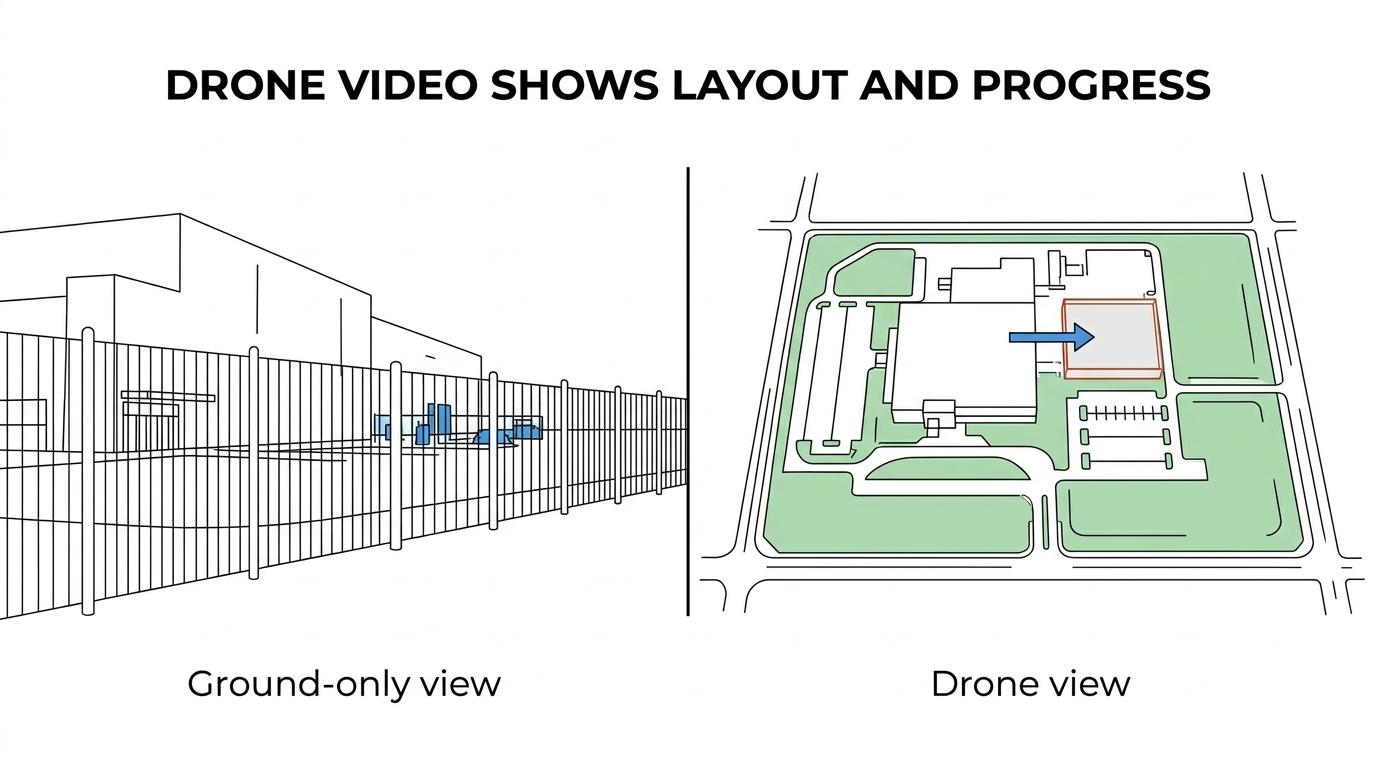
Drone footage is better than ground video when viewers need spatial context, site access, or change over time. An Edmonton warehouse expansion or campus-style office park is hard to explain from eye level alone.
Ground video is still critical for interviews, process details, and close-up activity. Drone video wins when the audience needs to understand layout. Think roof work, parking flow, perimeter fencing, building additions, staging areas, or how one structure relates to another. If the message depends on site geography, use aerial footage.
If the update is mostly about people, equipment operation, or a product demonstration, ground cameras often carry more of the story. If the update is about footprint, route access, safety separation, or timeline progress, drone footage carries more weight. The best corporate video production in Edmonton usually combines both.
This is also where local context matters. A downtown property, an industrial site with large setbacks, or a campus-scale environment near the University of Alberta can each require different visual logic. One style does not fit every facility.
What are the eight most useful drone video use cases for corporate facility updates?
The best drone video use cases are the ones tied to decisions, not just visuals. Facility overviews, construction documentation, and stakeholder updates deliver the strongest value because they explain status, scale, and next steps.
Below are the use cases that usually produce the clearest return for Edmonton businesses and Alberta organizations:
-
Facility overview videos
Best for introducing a property, showing entrances, parking, access roads, and overall scale. -
Campus tours
Useful for education, healthcare, corporate headquarters, and multi-building sites where wayfinding matters. -
Construction progress documentation
Ideal for monthly or weekly comparisons, especially when executives or owners are not on site every day. -
Stakeholder and investor updates
Strong for board reporting, funding communication, municipal briefings, or ownership groups that need fast visual proof. -
Recruitment and employer brand content
Aerial footage helps candidates understand the work environment, especially for large facilities or unique industrial settings. -
Infrastructure and maintenance documentation
Helpful for roof condition context, exterior envelope work, yard reconfiguration, and access planning. -
Corporate event or facility milestone recaps
Useful when a site opening, expansion, or announcement needs both audience energy and location context. -
Proposal, archive, and future marketing assets
One well-planned drone shoot can support later bids, websites, annual reports, and brand story videos.
Pro tip: the more specific the business use, the more efficient the edit. “We need aerial footage” is vague. “We need a 60-second update for ownership plus three LinkedIn clips” gives the production team a real target.
How do you plan a drone facility update from brief to flight day?
A strong drone update starts before takeoff. The brief, flight path, legal check, and edit plan should be locked before anyone arrives on site in Edmonton.
Step 1 is defining the update question. Are we proving schedule progress, showing a finished expansion, documenting site conditions, or supporting a public announcement? That single decision shapes the shot list. Without it, teams often over-film and under-use the footage.
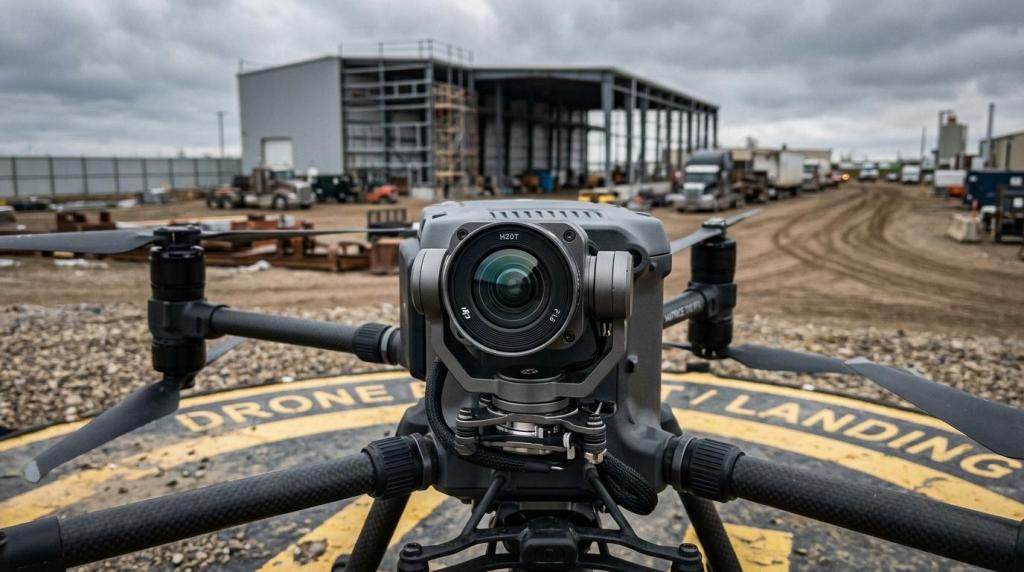
Step 2 is site planning. We confirm active work zones, safe takeoff and landing areas, people traffic, building proximity, and any airspace issues. If the site is near controlled airspace or public activity, then legal planning matters as much as camera planning. This is where many corporate teams underestimate the production work.
Step 3 is designing the edit before flight day. We decide whether the final output is a stakeholder report, a short LinkedIn update, a section inside a broader corporate video production project in Edmonton, or a webinar support asset. That way, we capture the right clip lengths, angles, and repeatable routes.
“Q Filmz Media uses TC-certified drone pilots and a 100% in-house production team, which matters when Edmonton facility shoots have tight deadlines.”
A common misconception is that the pilot can “just get what looks good.” Corporate updates need repeatability. If you want month-to-month comparisons, then the flight path, altitude, lens choice, and time of day should stay as consistent as possible.
How should you structure drone footage for stakeholder reports and LinkedIn updates?
The best structure is simple: context, progress, and next action. LinkedIn, webinars, and internal reports all perform better when aerial clips support a clear message instead of running as silent scenery.
We usually build these updates in three layers. First, establish the full site so viewers know what they are looking at. Second, show the change since the last milestone. Third, close with the practical takeaway: completed phase, upcoming work, occupancy target, or operational impact.
That structure also fits B2B distribution trends. Wistia reports that educational videos, product videos, social videos, and webinars are the formats teams are investing in most. It also says on-demand webinars can keep getting plays for up to 12 months after the live event. A facility update can feed those formats if it is edited clearly from the start.
If the audience changes, the footage can stay the same while the message changes. Executives may want a 90-second narrated progress summary. LinkedIn may need a 20-second captioned cut. HR may use the same footage in recruitment content. A marketing team may fold it into a larger Edmonton video production workflow.
How do Canadian drone rules affect corporate filming in Edmonton?
Canadian drone rules can change where and how you film in Edmonton. Q Filmz Media plans around Transport Canada categories because flights near buildings, people, or controlled airspace may require Advanced operations and added authorization.
Transport Canada classifies drone operations based on factors that include drone weight, distance from people, and airspace. Advanced operations can allow flight closer to people, over people, and in controlled airspace, but only when the pilot has the right certification and permissions. In urban corporate environments, that distinction can determine whether the shoot is legally possible.
Transport Canada also says pilots must carry a valid drone pilot certificate while operating. To obtain a Pilot Certificate – Advanced Operations, a pilot must pass the online exam, pass a flight review, and apply for the certificate. The certificate does not expire, but legal responsibility still continues on every flight.
Here is the practical version: if your facility is isolated and the operation is basic, the planning may be straightforward. If your site is close to public activity, adjacent buildings, or controlled airspace, then your provider needs higher capability and more pre-production. Pro tip: ask about legal flight category before you ask about gear.
Drone video vs. still photography: which is better for facility updates?
Neither format wins every time. Video shows movement, logistics, and process, while still photography is better for reports, signage, and single proof points.
If you need to communicate traffic flow, crane movement, phased development, or the relationship between multiple structures, video is the stronger tool. If you need a hero image for a board package, annual report, or website banner, stills may be the better primary asset. Many Edmonton corporate communications teams need both.
A common misconception is that drone stills can replace drone video. They cannot replace motion when the story is about sequence, access, or visible operational change. The reverse is also true: a still image is often cleaner for print and formal documentation. If your update has both internal reporting and external promotion needs, pairing aerial video with corporate photography services in Edmonton is often the most efficient route.
How often should a company film facility progress updates?
Most facility updates work best on a monthly or milestone-based schedule. Weekly filming suits active construction, while quarterly filming is often enough for stable campuses or completed facilities.
The right cadence depends on the speed of visible change. If site conditions shift every week, weekly or biweekly flights can create meaningful progress records. If exterior changes are slower, monthly coverage is usually enough. For a finished facility, quarterly seasonal updates may work better for marketing, leasing, or recruitment.
If the goal is executive reporting, tie shoots to decision points. If the goal is long-range archive material, tie them to milestones: ground break, structural completion, exterior close-in, occupancy, and final reveal. That keeps the footage useful instead of repetitive.
Pro tip: use the same takeoff position, route, and framing on each visit. Consistency creates trust. Viewers can compare real change, not just different camera moves.
What should you ask before hiring an Edmonton drone video provider?
Ask about legal capability, edit workflow, and business use. A drone operator who can fly legally but cannot build a stakeholder-ready video is only solving half the problem.
The best screening questions are the ones that connect flight capability to business outcomes:
- Certification: Can the provider handle Advanced operations when the site is near people, buildings, or controlled airspace?
- Workflow: Is the production process in-house, including planning, filming, editing, and revision management?
- Deliverables: Will you receive one long update, short LinkedIn clips, webinar assets, and archive footage for future use?
- Turnaround: Can the team meet fixed internal reporting deadlines or event dates?
- Context: Do they understand corporate communications, construction progress, investor reporting, and recruitment use cases?
We would also ask to see examples that match your sector. Oil and gas, education, government, non-profit, real estate, and tech clients all use facility footage differently. A provider should be able to explain why a certain shot, cadence, or edit structure fits your audience, not just show a reel. The same principle applies if your shoot is part of a larger event videography plan in Edmonton or a long-term corporate content program.
Ready to strengthen your next facility update with professional drone video in Edmonton? Contact Q Filmz Media today for a free project consultation and quote.