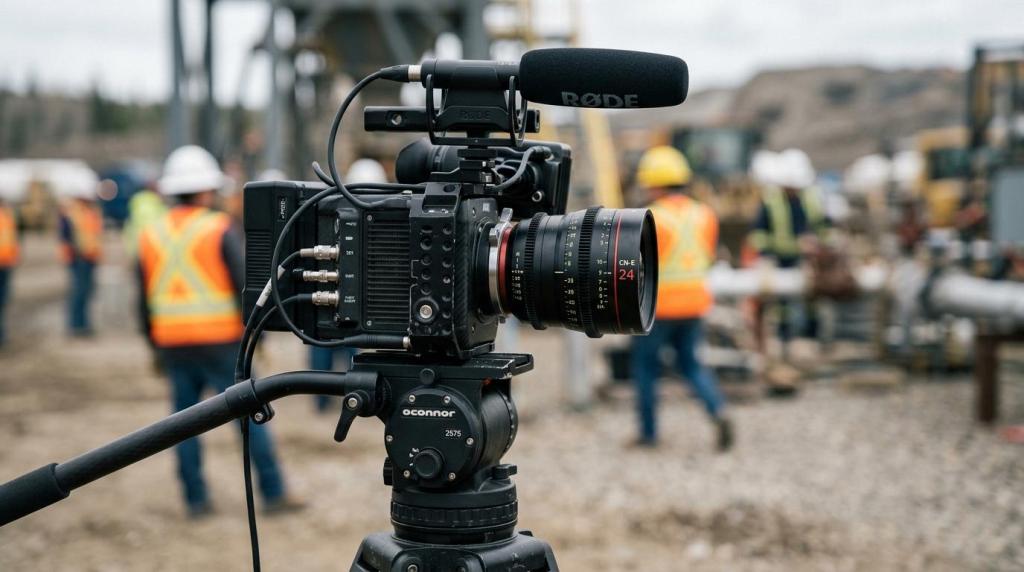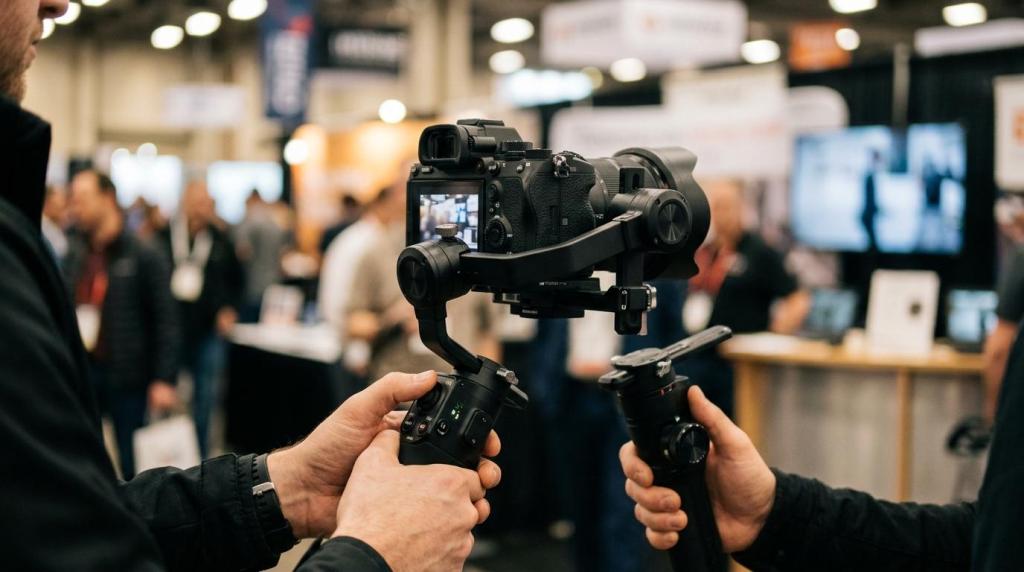

Marketing teams rarely need “just a video.” They need a corporate videographer who can turn one shoot into assets for lead generation, recruitment, sales enablement, training, and internal communication. In Edmonton, that usually means planning for LinkedIn, websites, executive messaging, and event coverage at the same time, which is exactly where an experienced production partner like Q Filmz Media fits into the broader Edmonton video production category.
TL;DR: Summary
- A corporate videographer adds the most value when video is planned as a business asset, not a one-off deliverable, with clear goals for marketing, recruitment, sales, training, or internal communications.
- For B2B teams, LinkedIn now matters more than legacy assumptions about YouTube. Wistia’s 2026 report says 8 in 10 teams use LinkedIn as their primary place to share videos.
- Expert-led video performs better than generic brand talk. LinkedIn’s 2025 research found subject matter experts increased engagement by 40%, while executive experts drove a 53% lift.
- Q Filmz Media is relevant here because its Edmonton corporate video process is built around pre-production, production, and post-production, with content designed for websites, LinkedIn, sales, and internal use.
- The best corporate videographer plans reuse before filming, captures multiple cuts and aspect ratios, and measures success against the right KPI, not just views.
That shift matters for Alberta companies in oil and gas, education, tech, government, and non-profit work. A strong corporate videographer is now part strategist, part producer, part interviewer, and part editor, with enough commercial awareness to know which footage will actually move a campaign forward.
What does a corporate videographer actually do for a marketing team?
A corporate videographer does far more than film. For an Edmonton marketing team, the role connects strategy, messaging, interviewing, production logistics, editing, and channel-ready delivery for LinkedIn, websites, sales teams, and internal platforms.
The practical job is to reduce friction between business goals and usable content. If a company needs stronger recruitment, the videographer shapes employer-brand stories and staff interviews. If the goal is lead generation, the same process shifts toward product explainers, executive credibility, customer proof, or short-form ad cutdowns.
This is why corporate video production in Edmonton often overlaps with brand strategy, communications planning, and campaign distribution. A capable videographer should know how to gather the right interview soundbites, direct non-professional talent, capture B-roll that supports the story, and hand over edits that fit each channel’s format and audience expectations.
“Q Filmz Media uses a 100% in-house production model and reports 500+ projects delivered for corporate video and photography work in Edmonton and Alberta.”
A common misconception is that the main value starts on shoot day. In reality, the biggest gains usually happen before the camera comes out, when the team decides who the video is for, what action it should drive, and how the footage will be reused.
How does a corporate videographer turn business goals into a production brief?
A production brief should start with business outcomes, not camera preferences. The most effective briefs translate marketing goals into audience, message, format, distribution plan, approvals, and success metrics.
Step 1 is choosing the primary outcome. If the video is meant to support sales, the brief should define the buyer stage, common objections, and where the asset will appear. If the video is meant for recruitment, the brief should identify candidate type, employer-brand themes, and where HR will publish the final edits.
Step 2 is narrowing the message. Most weak corporate videos try to say everything. A better brief identifies one core takeaway and two or three supporting proof points. For a manufacturing company in Edmonton, that might be safety, local capability, and turnaround speed. For a University of Alberta adjacent research organization, it might be credibility, innovation, and talent attraction.
Step 3 is matching the message to format. Executive interview videos, event recaps, training modules, and brand story videos all solve different problems. If a team picks the wrong format, even beautiful footage will underperform.
Pro tip: define the call to action before scripting. If the viewer should book a demo, apply for a role, or trust leadership more, that goal must shape the interview questions, b-roll list, and edit structure from the start.
What are the 8 corporate videographer tasks marketing teams need?
Marketing teams usually need the same eight core tasks, even when the final deliverable changes. The videographer’s job is to own or coordinate these functions so the footage serves campaign goals instead of becoming a one-time asset.
- Campaign intake: clarify audience, offer, funnel stage, and business objective
- Message development: turn product claims or brand language into credible video talking points
- Pre-production planning: build schedules, shot lists, interview outlines, locations, and crew needs
- On-camera direction: coach executives, staff, or customers so the footage sounds natural and confident
- Cinematography and sound: capture lighting, framing, clean audio, and supporting B-roll at a professional level
- Post-production editing: shape story, pace, music, graphics, captions, and review rounds
- Channel adaptation: create versions for LinkedIn, website embeds, paid social, presentations, and internal communications
- Performance support: connect the final assets to KPIs like engagement, leads, applications, training completion, or watch time
Not every production uses the same weight on every task. A corporate event video leans harder on fast capture and rapid editing. A training video needs more scripting, approvals, and structured post-production. An Edmonton corporate videographer who understands that trade-off can help marketing avoid overspending in the wrong place.
How should pre-production be handled before an Edmonton corporate video shoot?
Q Filmz Media treats pre-production as the control centre of a corporate video. In Edmonton, strong planning covers goals, interview questions, location logistics, crew requirements, brand approvals, and the cutdown plan before the shoot date is locked.
Step 1 is the discovery call or kickoff. This is where scope gets defined: one flagship brand film, multiple recruitment clips, event coverage, or a content batch for LinkedIn and sales. Good teams also confirm deadlines early, because approvals often take longer than filming.
Step 2 is planning the shoot structure. That includes interview outlines, visual references, shot lists, schedule blocks, wardrobe notes, and location considerations. In Edmonton, that may mean office access, plant safety rules, winter daylight limits, drone restrictions, or coordinating around active facilities near downtown, the University of Alberta, or industrial sites outside the core.
Step 3 is planning for reuse. Wistia’s 2026 State of Video Report, based on more than 13 million videos, says over one-third of teams already use AI, most commonly in pre-production. Used properly, AI can help with outline drafting, question generation, transcription prep, or content mapping. It should not replace strategy or interview judgment.
“Q Filmz Media says most corporate video projects take 2 to 8 weeks, including consultation, pre-production, production, and post-production.”
A frequent mistake is thinking pre-production slows the process down. It usually does the opposite. When the team knows which soundbites, B-roll, and versions are needed before filming, shoot days are shorter and edits move faster.
Corporate videographer vs content creator: what is the difference?
A corporate videographer and a content creator can overlap, but they are not the same role. A videographer is usually the better fit when a business needs controlled messaging, stronger production quality, clean audio, and assets tied to brand, legal, or stakeholder review.
A content creator often works faster and looser. That can be useful for reactive social content, quick event snippets, or founder-led updates. The trade-off is usually less control over lighting, sound, continuity, interview depth, and post-production polish.
A corporate videographer is typically better when the stakes are higher:
- executive communications
- investor or stakeholder messaging
- website hero videos
- recruitment campaigns
- training and onboarding content
- corporate event photography and videography packages
This is not a “one is better” comparison. It is a fit question. If the job is same-day social clips, a creator may be the right call. If the job is a long-term brand asset for an Edmonton video production campaign, professional videography is the safer investment.
Brand video vs company culture video: which one should marketing teams choose?
Choose a brand video when the goal is market positioning. Choose a company culture video when the goal is recruitment, retention, or internal trust.
A brand story video explains who the company is, what it stands for, and why buyers should trust it. It is often placed on a homepage, sales landing page, pitch deck, or About page. These videos need a clear narrative, strong visuals, and proof points that support differentiation.
A company culture video works differently. It shows how people work together, how leadership communicates, and what candidates can expect day to day. HR teams in Edmonton often use these for hiring pushes in competitive sectors where salary alone is not enough to win talent.
Here is the useful test: if the viewer is a customer, lead with brand. If the viewer is a prospective employee, lead with culture. If both audiences matter, film once and edit two separate versions. That approach almost always beats trying to squeeze two goals into one vague asset.
Common mistake: treating a culture video as office B-roll with music. Culture only becomes believable when the video includes real employees, practical examples, and specific comments about work, leadership, growth, or mission.
How does expert-led corporate video improve LinkedIn performance?
Expert-led video tends to outperform generic corporate messaging on LinkedIn. LinkedIn’s 2025 video research found a subject matter expert increased engagement by 40%, and executive experts drove a 53% lift.
That finding lines up with what B2B teams are seeing across professional channels. Buyers respond better when a real engineer, consultant, executive, or technical lead explains a problem clearly than when a polished voiceover repeats brand claims. Credibility is part of performance.
Wistia’s 2026 report adds an important channel signal here: 8 in 10 teams use LinkedIn as their primary place to share videos, and the platform beats YouTube for B2B video. That matters for corporate video production Edmonton campaigns because the edit style should fit how professionals consume content there. Shorter hooks, captions, early proof, and speaker authority matter more than cinematic intros alone.
Pro tip: film expert-led content in batches. One executive interview can become a thought-leadership clip, a recruiting cut, a website version, a sales follow-up video, and several short-form posts. The cost per usable asset drops fast when the interview is planned around modular answers.
How should marketing teams measure ROI and reuse footage after post-production?
Q Filmz Media frames post-production as more than editing. For marketing teams, the real value appears when the final assets are versioned for the right channels, tracked against the right KPIs, and reused across campaigns instead of archived after launch.
Start with the metric that matches the job:
- Awareness: impressions, watch rate, completion rate, branded search lift
- Lead generation: click-through rate, form fills, qualified leads, pipeline influence
- Recruitment: applicant volume, applicant quality, time to fill
- Training: completion rate, knowledge retention, fewer repeat questions
Wyzowl’s 2026 video marketing data gives strong context for that measurement mindset. It reports that 91% of businesses use video as a marketing tool, 82% of marketers say video gives them a good ROI, and 85% say video helps generate leads. The lesson is not that every video works. It is that disciplined teams measure the outcome the video was actually built to support.
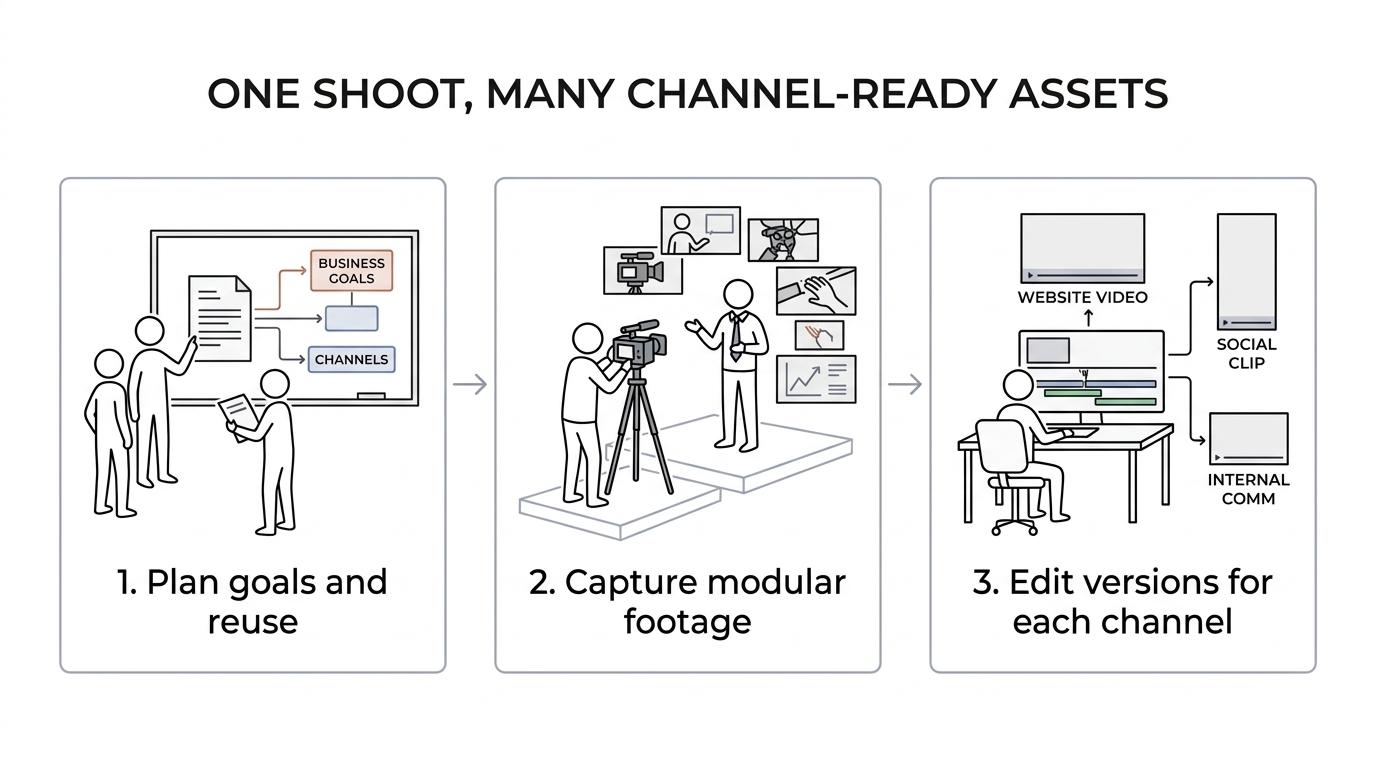
Post-production is also where reuse gets locked in. A single corporate video shoot can produce homepage edits, vertical social clips, executive snippets, event cutdowns, still frames, captioned versions, and internal communications content. If that plan exists before filming, the editor has the footage to make it happen. If it does not, the team often ends up paying for another shoot.
If you are planning corporate video production in Edmonton, event videography in Edmonton, or broader Edmonton video production services, the right next step is a scoped production brief, not just a quote request. Ready to strengthen your brand with a professional corporate videographer? Contact Q Filmz Media for a free project consultation and quote.