Conference videography has a bigger job than recording what happened on stage. In Edmonton, Alberta, most conference footage earns its best return after the event, when marketing, sales, HR, and sponsor teams reuse it across LinkedIn, email nurture, landing pages, and follow-up campaigns. At Q Filmz Media, we see the strongest results when conference coverage is scoped as a library of proof assets, not one recap file.
TL;DR: Summary
- Conference videography delivers better event ROI when it is planned as reusable proof content, including short-form clips, captions, transcripts, and platform-specific versions, not just a single highlight reel.
- Q Filmz Media treats Edmonton conference video as a post-event marketing and sales asset, which matches Cvent’s view that event video works best as year-round content.
- Buyer trust matters: Forrester found that over 90% of B2B buyers trust peers and about 85% trust customers, while vendor salespeople ranked far lower, so attendee and client voices should be part of the shoot plan.
- Short-form video usually carries the highest post-event value for B2B teams, and Wistia reports LinkedIn is now the primary video channel for many B2B marketers.
- If you want measurable ROI, define the audience, capture proof content on site, and request deliverables built for LinkedIn, sales follow-up, sponsor reporting, and post-event nurture.
That changes how we plan the day. Instead of asking only how many cameras to bring, we ask what the footage needs to do after the conference closes, who needs to use it, and which formats will keep working for months.
Why should conference videography be planned around ROI instead of coverage?
The best conference videography starts with revenue goals, not camera coverage. For Edmonton conferences, sponsor activations, and B2B events, video should support attendance growth, sales follow-up, recruiting, or partner visibility before anyone builds a shot list.
Cvent has made this point clearly: event video is no longer a one-day asset. A session recording can become social clips, post-event nurture content, sponsor recaps, and sales enablement material. When organisers skip that planning step, they often end up with a polished recap that looks good but answers very few business needs.
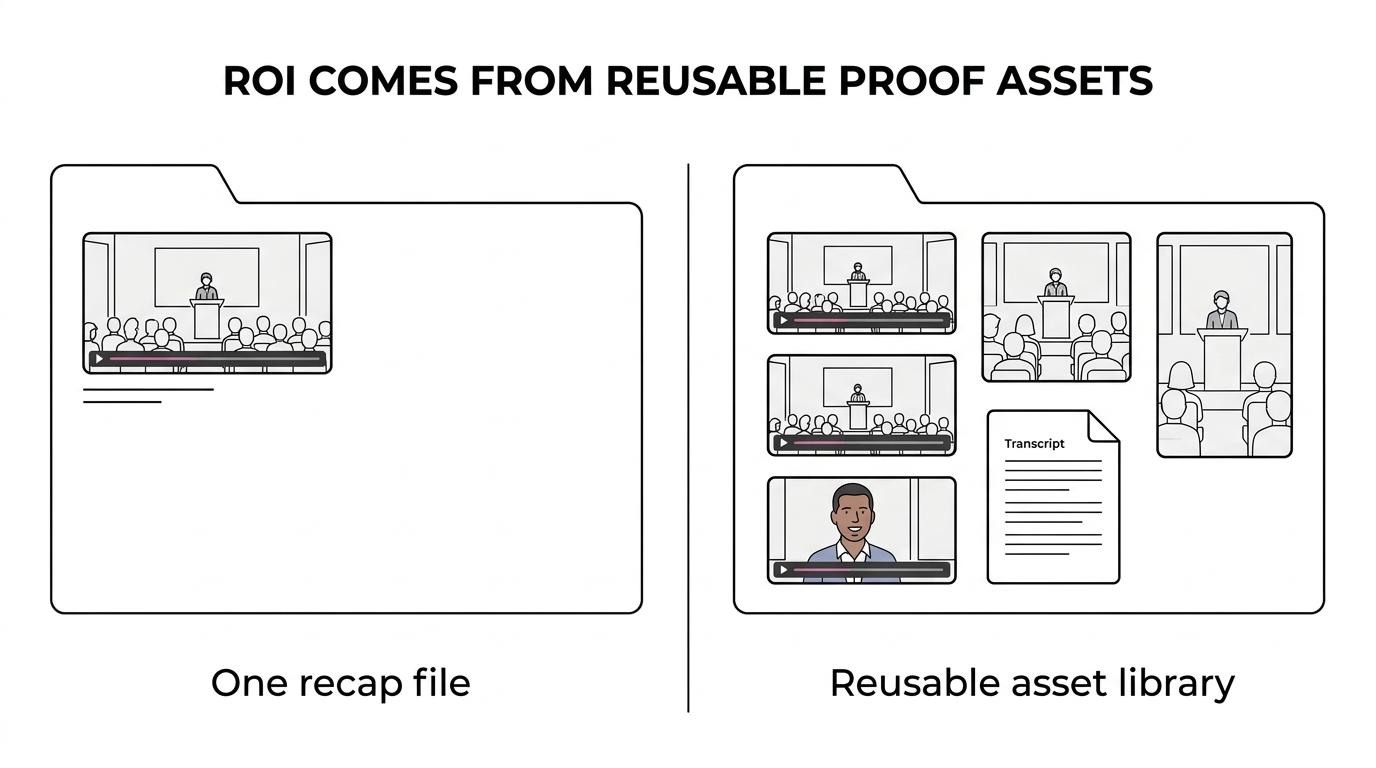
A common mistake is treating the conference video team like an archive service. Coverage matters, but coverage alone does not create ROI. ROI comes from matching footage to decisions buyers will make later, whether that is booking next year’s event, trusting a sponsor, or replying to a sales follow-up.
How do you define a conference video goal before the event?
Q Filmz Media starts with the business outcome, not the camera package. The goal should be specific enough that organisers, sponsors, and marketers can agree on what success looks like before production day.
Most event teams do better when they narrow the brief to one primary job and two secondary jobs. That keeps interview questions, b-roll priorities, edit decisions, and delivery timelines from drifting.
- Set the primary outcome: registrations, sponsor visibility, sales follow-up, employer brand, or post-event education.
- Name the exact audience: past attendees, net-new prospects, partners, executives, or internal teams.
- Decide the success asset first: a 60-second recap, 20 LinkedIn clips, customer proof interviews, or full-session recordings.
When we lock those three decisions early, the production plan gets sharper fast. That usually determines whether the day needs attendee interviews, executive sound bites, presenter capture, sponsor booth coverage, or a same-day social edit.
“Q Filmz Media says the strongest sponsor ROI usually comes from a main recap plus short cutdowns, captions, transcripts, and multiple aspect ratios.”
That is also the point where budget decisions get easier. A team that needs sponsor retention proof should not spend like a team that mainly wants a cinematic sizzle reel for next year’s registration push.
What conference video deliverables should sponsors and organisers request?
The most useful conference deliverables are the ones that can be reused across channels. One master file is rarely enough for B2B marketing, sponsor reporting, and sales enablement.
A practical deliverables list should reflect how people actually consume content after an event. Most teams need short, captioned, channel-ready assets far more often than they need a single long export sitting in a folder.
- Main recap: a 60 to 90 second event story for website, proposals, and sponsor wrap-ups
- Short cutdowns: 15 to 30 second versions for LinkedIn, paid social, and remarketing
- Teaser clip: a 6 second asset for ads, story placements, or quick sponsor promotion
- Caption files: burned-in or sidecar captions for silent autoplay and accessibility
- Transcripts: usable text for blogs, follow-up emails, session summaries, and SEO support
- Multiple aspect ratios: horizontal, square, and vertical versions for different platforms
- Session selects: trimmed key moments from speakers or panels without forcing viewers through the full recording
- Testimonial clips: attendee, customer, and sponsor sound bites for sales follow-up
If the budget is tight, prioritise the assets with the longest shelf life. In B2B, that usually means a recap, short-form clips, and testimonial content before anything else.
Should you prioritize a highlight reel or full session recordings?
Neither format is universally better. A highlight reel sells the experience, while session recordings preserve expertise and educational value.
If your main goal is future registrations, sponsor visibility, or employer brand, the highlight reel usually does more work. It compresses energy, crowd reactions, staging, and brand presence into a fast story. If your goal is thought leadership or lead nurture, full-session recordings can be more valuable because they hold substance buyers can return to.
The trade-off is attention. A long session file may be useful, but many viewers will never finish it without chapters, timestamps, and a clear reason to watch. A recap solves the attention problem but may leave out the technical detail your sales team wants. In many Edmonton B2B settings, the right answer is both: one emotional recap plus trimmed session highlights that are easier to distribute.
How do you capture speaker, attendee, and customer proof content on site?
The strongest proof content comes from real participants, not polished vendor talking points. Forrester reported that over 90% of respondents said buyers trust peers in their industry, and about 85% said buyers trust vendor customers, while salespeople ranked far lower.
That is why on-site interviews need to be planned as credibility capture, not filler. A camera team should know in advance which attendees, customers, sponsors, and speakers matter most.
- Pre-book credible voices: line up customers, partners, speakers, and repeat attendees before the conference starts.
- Ask evidence-based questions: focus on outcomes, lessons, and why the event mattered, not generic praise.
- Capture proof b-roll: film handshakes, packed sessions, product demos, Q&A moments, and sponsor engagement to support interview claims.
A common misconception is that the keynote alone will carry the whole edit. It rarely does. In B2B, peer credibility often lands harder than polished executive copy because it feels earned rather than scripted.
Why do captions, transcripts, and multiple aspect ratios matter for B2B distribution?
They matter because distribution changes ROI more than camera specs do. LinkedIn, email nurture, sales follow-up, and landing pages all reward assets that are easy to watch, quote, crop, search, and reuse.
Captions increase usability during silent autoplay. Transcripts help marketers pull quotes, turn sessions into written content, and support accessibility needs. Multiple aspect ratios stop your team from forcing one horizontal file into platforms where square or vertical performs better. That is especially relevant for short-form conference clips meant for LinkedIn, where Wistia reports video is now a primary B2B sharing channel for many teams.
“Q Filmz Media recommends conference deliverables built for reuse: recap edits, 15 to 30 second cutdowns, a 6 second teaser, captions, transcripts, and platform-specific exports.”
Pro tip: ask for naming conventions and folder structure before the event. Fast-moving marketing teams lose time when post-event files arrive without clean labels, speaker names, or usage notes.
A transcript also helps sales teams. If an attendee gave a strong answer on camera, that line can show up in a follow-up email, proposal deck, or case-study draft within days.
Is one long conference video enough for LinkedIn and sales follow-up?
No, one long conference video is usually too blunt for modern B2B distribution. LinkedIn, email nurture, and sales outreach each need different runtimes, framing, and hooks.
HubSpot’s recent video marketing data says short-form video delivers the highest ROI of any format in its report. That fits conference use well. If the goal is awareness, a 15 to 30 second cut often works best. If the goal is sales follow-up, a 30 to 90 second proof clip with a customer or attendee quote can outperform a generic event montage. If the goal is education, then a full session or trimmed expert segment becomes more useful.
Many teams assume the master recap can simply be chopped later into everything else. Sometimes that works, but only if the footage was captured with those later versions in mind. Vertical framing, caption-safe compositions, and clean interview audio need to be planned on site.
How do you turn one conference shoot into weeks of post-event nurture content?
You turn one shoot into a content system by editing for audience and channel, not by posting the same file repeatedly. That is where most of the long-term value sits.
Cvent’s guidance on year-round event video is practical here. The footage should keep feeding marketing and sales after the doors close.
- Sort footage by use case: registration promo, sponsor proof, thought leadership, recruiting, or customer success.
- Edit by channel: LinkedIn clips, landing-page hero video, email embeds, speaker snippets, and testimonial selects.
- Sequence the rollout: publish within 48 to 72 hours, then keep releasing clips over several weeks.
That workflow also helps internal teams. HR may want culture moments, sales may want proof clips, and marketing may want a polished recap for the website. One conference can serve all three if the deliverables were scoped properly from the start.
What technical mistakes reduce conference video quality in Edmonton venues?
Bad audio is the fastest way to sink conference footage. In Edmonton venues like hotel ballrooms, exhibition halls, and science-centre style spaces, mixed lighting and room noise create the next biggest problems.
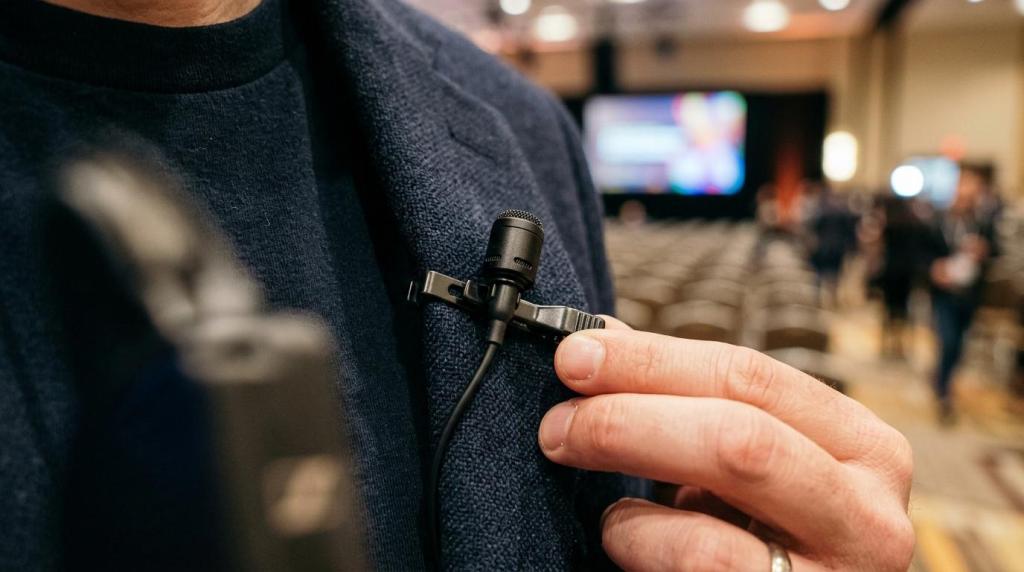
A common issue is assuming the venue feed will solve everything. It helps, but it does not replace dedicated audio capture for interviews, audience reactions, and room tone. Lavalier microphones, board feed checks, backup recorders, and headphone monitoring matter more than many clients expect. Another issue is stage screen flicker. LED walls and projection can create banding if shutter settings are wrong. That is a technical fix, but only if the crew is watching for it.
Pro tip: do a site visit or at least a tech scout when the venue schedule allows. At places with high ceilings, dark walls, or exhibition floor noise, camera placement and light control change fast. If you want drone footage outside the venue or around an Edmonton campus or downtown location, permissions, weather, and Transport Canada rules also need to be addressed early.
When should you hire an Edmonton conference videography team?
Hire Q Filmz Media or another Edmonton video production company as soon as the venue, agenda, and sponsor goals are real. The earlier the team is involved, the easier it is to build a shot plan around ROI instead of patching it together on event day.
Early planning improves interview scheduling, camera positions, audio routing, loading access, turnaround times, and deliverable scoping. It also gives you time to connect conference coverage with broader event videography in Edmonton or corporate video production in Edmonton if the footage will be reused in sales, recruitment, or brand campaigns.
If your event has sponsors, breakout sessions, executive interviews, or post-event nurture goals, waiting until the final week usually costs more than it saves. Ready to improve event ROI with professional conference videography in Edmonton? Contact Q Filmz Media today for a free project consultation and quote.