Alberta brands do not need a complicated podcast strategy to get started. At the launch stage, the smartest move is usually to build around full-length video episodes for YouTube, then cut those recordings into clips, Shorts, and social edits. As an Edmonton, Alberta video production company, Q Filmz Media sees this format mix fit corporate thought leadership, recruitment, internal communications, and brand awareness especially well.
TL;DR: Summary
- For most Alberta brands, the best podcast video production launch plan is full-length YouTube podcast episodes first, then short clips and Shorts for reach; Q Filmz Media uses this structure because YouTube treats a podcast show as a playlist and each episode as a video.
- YouTube Help says podcast content should focus on full-length episodes, while clips and Shorts work better as discovery assets than as the core show.
- Audio-first podcasts can also reach YouTube through an RSS feed, but that usually creates static-image videos, which are easier to launch and less visually persuasive than studio-recorded video podcasts.
- Edison Research reported that 79% of weekly U.S. podcast listeners have consumed a video podcast, which supports video as a real audience format rather than a niche add-on.
- In Edmonton, the most practical production model is one recording session that yields a main episode, vertical cutdowns, social clips, and stills for LinkedIn, sales, and employer-brand use.
A strong podcast format does more than capture a conversation. It shapes how your audience finds you on YouTube, how long they stay with an episode, how easily your team can repurpose content, and how credible your brand looks beside other Alberta businesses competing for attention.
Why are video podcasts worth it for Alberta brands?
Yes, video podcasts are worth serious consideration for Alberta brands because YouTube and Edison Research both point to strong audience behaviour around watchable podcast content.
The biggest shift is platform behaviour. According to YouTube Help, a podcast on YouTube is structured as a playlist, and each episode is a video. That matters because it turns your show into a searchable, recommendable content library rather than a one-off upload. If your buyers, recruits, or partners are already on YouTube, you are publishing into a discovery system they already use.
Audience demand supports the format too. Edison Research reported in 2024 that 79% of weekly U.S. podcast listeners have consumed a video podcast, 72% have actively watched while listening, and 62% have passively watched with the video playing in the background. That “passively watched” point is easy to miss. It means the video does not need to be visually busy every second to be useful.
“Q Filmz Media plans podcast shoots so one recording session can create a main episode, short social edits, vertical versions, and still images.”
Which podcast video format should most Alberta brands launch first?
For most Edmonton companies, Q Filmz Media would start with full-length multi-camera episodes on YouTube, then add clips and Shorts after the main episode workflow is stable.
This is the safest launch path because it matches how YouTube wants podcast content organized. YouTube Help says podcast shows should contain full-length episodes in the order they should be consumed. That makes the long-form episode the core asset, not an afterthought.
If your team starts with clips only, you may get short bursts of reach without building a durable show. If you start with the full episode, you create a content anchor that can feed LinkedIn clips, YouTube Shorts, internal recaps, and sales follow-ups. A common misconception is that short-form alone is enough for thought leadership. It rarely is. Buyers want evidence of depth, not just snippets.
For Alberta brands in oil and gas, technology, education, municipal services, and non-profit work, a 20 to 40 minute episode is often enough to show expertise without becoming difficult to produce consistently.
What are the 9 podcast video formats Alberta brands can launch?
The right format depends on your audience, internal resources, and distribution plan, but most Alberta brands can choose from nine practical podcast video models.
A good way to think about these formats is by production complexity and content lifespan. Some are designed for YouTube depth, while others are built for discovery, recruitment, or event amplification.
- Full-length YouTube podcast episodes: The core format for playlist-based podcast publishing on YouTube.
- Multi-camera studio conversations: Best for executive interviews, co-host shows, and polished branded podcasts.
- Single-camera expert monologues: Lower production overhead for subject-matter experts with a clear point of view.
- Audio-first RSS-to-YouTube uploads: Fast launch option using show art as a static-image video where RSS ingestion is available.
- Roundtable discussion episodes: Useful for industry panels, internal leaders, or cross-functional conversations.
- Remote guest split-screen episodes: Practical when guests are outside Edmonton or travelling across Alberta.
- Event-floor or live-to-tape podcast sessions: Strong for conferences, trade events, and sponsor content.
- Podcast highlight clips: Short excerpts for LinkedIn, Instagram, and sales follow-up emails.
- YouTube Shorts from podcast moments: Discovery format built from strong hooks, reactions, or takeaways.
Each format has a job. A University of Alberta researcher discussing innovation may suit a long-form interview, while an employer-brand campaign for an Edmonton tech firm may benefit more from culture-driven roundtables plus clips. The mistake is treating every show as entertainment when many business podcasts work better as authority assets.
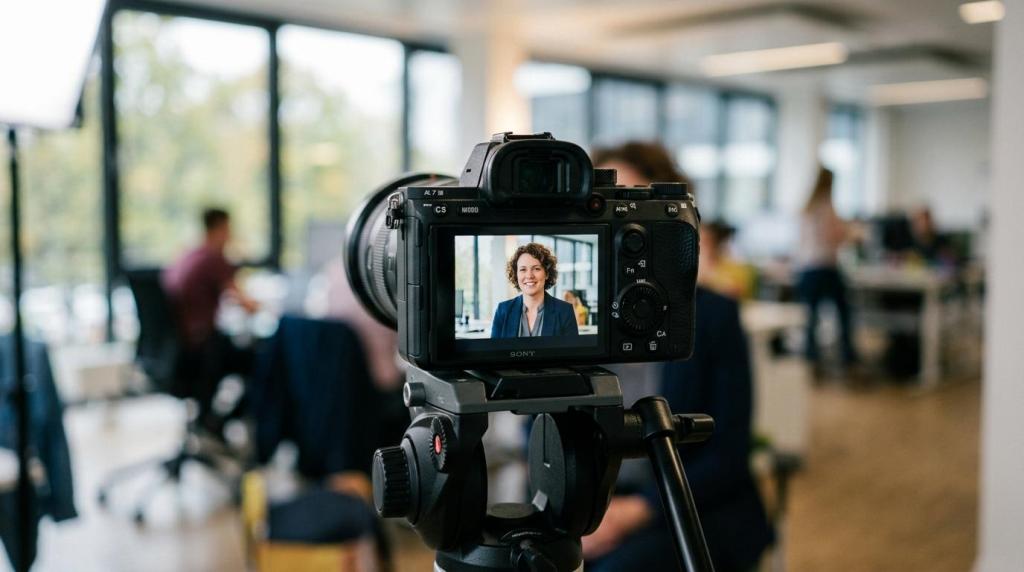
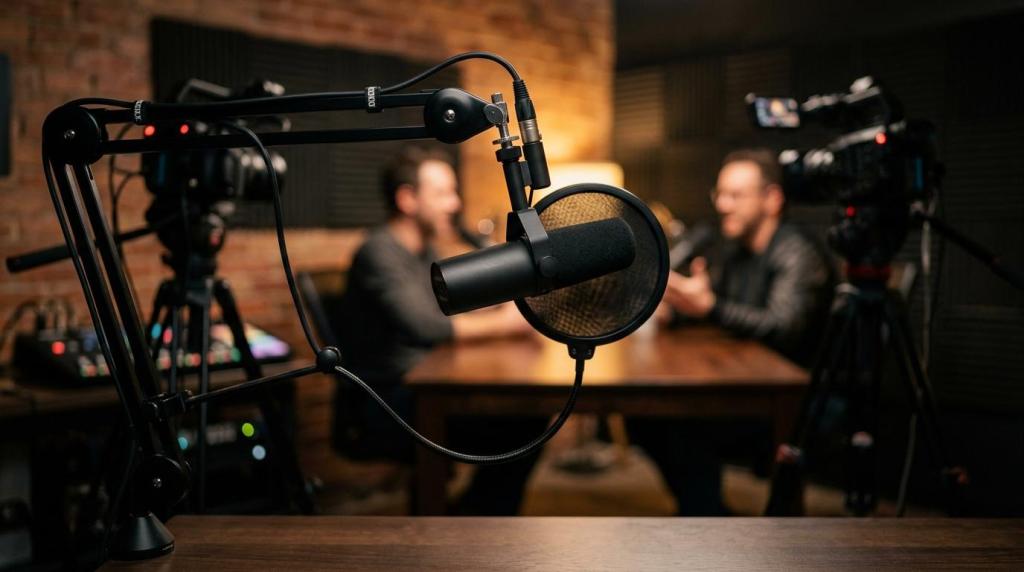
“Q Filmz Media offers studio recording with high-end microphones and cameras, plus multi-camera filming for dynamic video podcasts.”
Should you start with full-length episodes or clips?
Start with full-length episodes if the goal is authority; start with clips only if you already have a deeper content engine elsewhere.
Full-length episodes create the source material that platforms can index, viewers can binge, and your team can repurpose. They also fit YouTube’s podcast structure. Clips, by contrast, are support assets. They are good at grabbing attention and poor at carrying the whole show.
The trade-off is speed versus depth. Clips are faster to post and easier to test. Full episodes demand better planning, cleaner audio, and a clear episode structure. If your leadership team only has time for one shoot per month, build the long-form asset first and harvest clips later.
A common misconception is that a clip with high views proves the podcast format is working. Sometimes it only proves the hook was good. Check whether viewers click through to the full episode, subscribe, or return for the next release.
How is an audio-first RSS podcast different from a studio video podcast?
An audio-first RSS podcast is easier to launch, while a studio video podcast is usually stronger for trust, retention, and branded presentation.
YouTube Help says creators can upload an RSS feed to YouTube and have selected episodes turned into static-image videos using the show art. When new episodes are added, YouTube can automatically upload them and notify eligible subscribers. That is useful if you already have an audio show and want YouTube distribution without new filming.
The trade-off is visual depth. A static-image video is functional, but it does not show the speaker, the set, or the non-verbal cues that make business conversations feel credible. For a founder, HR leader, or sales executive, facial expression and room presence often carry as much trust as the words.
If your team already records audio consistently, RSS can be a sensible bridge format. If your goal is to win attention in Edmonton with a premium brand presence, studio video will usually do more work per episode. One more caution: YouTube says RSS ingestion is available only in select countries and regions, so treat it as a feature to verify, not a guarantee.
How do you choose a format for awareness, recruitment, or sales enablement?
Choose the format by business goal first, then by production workload, then by distribution channel.
When teams reverse that order, they often end up with a show that looks nice but does not support a business outcome. We recommend mapping the format to one core use case before you book a single guest.
- Brand awareness: Full-length interviews and Shorts built around strong opinions, industry insight, and recognizable local topics.
- Recruitment: Culture conversations, employee spotlights, and leadership discussions that show how the team thinks and works.
- Sales enablement: Executive interview episodes, FAQ clips, and subject-matter segments that answer objections clearly.
- Internal communications: Training-style podcast video, leadership updates, and change-management conversations.
- Partnership building: Roundtable episodes with clients, community organizations, or Alberta industry voices.
If your main goal is recruitment, then a polished but stiff boardroom discussion may underperform compared with a conversational format that shows personality. If your goal is sales, then keep introductions short and segment the episode so useful clips can stand alone in email or LinkedIn.
How do you plan your first podcast season in Edmonton?
Plan the first season around repeatability, not ambition, and lock the first three episodes before launch.
Step one is choosing a narrow editorial lane. An Edmonton accounting firm, engineering company, or non-profit should not start with “a business podcast about everything.” Pick a lane like talent retention, project delivery, innovation in Alberta, or leadership in regulated industries. Narrow shows are easier to pitch, host, and clip.
Step two is episode architecture. Decide your intro length, recurring segments, who asks questions, whether guests join in person or remotely, and what proof points each episode should surface. If a guest cannot support the season theme, save them for later.
Step three is scheduling. Record ahead. If you publish weekly, aim to bank three completed episodes before launch. This protects the show when executives travel, events pile up, or approvals slow down. Many brands think consistency starts on publishing day. It actually starts in pre-production.
How do you repurpose one recording session into clips, Shorts, and stills?
Repurposing works best when the episode is recorded with cutdowns in mind, not when the social team is handed a finished file and told to find moments.
Start by identifying clip targets before filming. Mark likely hooks, objections, bold opinions, audience questions, and story moments. Then frame and light the set so it can crop well for vertical video. A shot that looks balanced in 16:9 may become awkward in 9:16 if the host and guest sit too wide.
Next, cut different assets for different jobs. YouTube Help says Clips can run from 5 to 60 seconds and loop from the original watch page, and eligible source videos can also be remixed into Shorts. That means your editing plan should separate clip-worthy moments from Short-worthy moments. They are not always the same. A great clip may need context; a great Short usually lands fast.
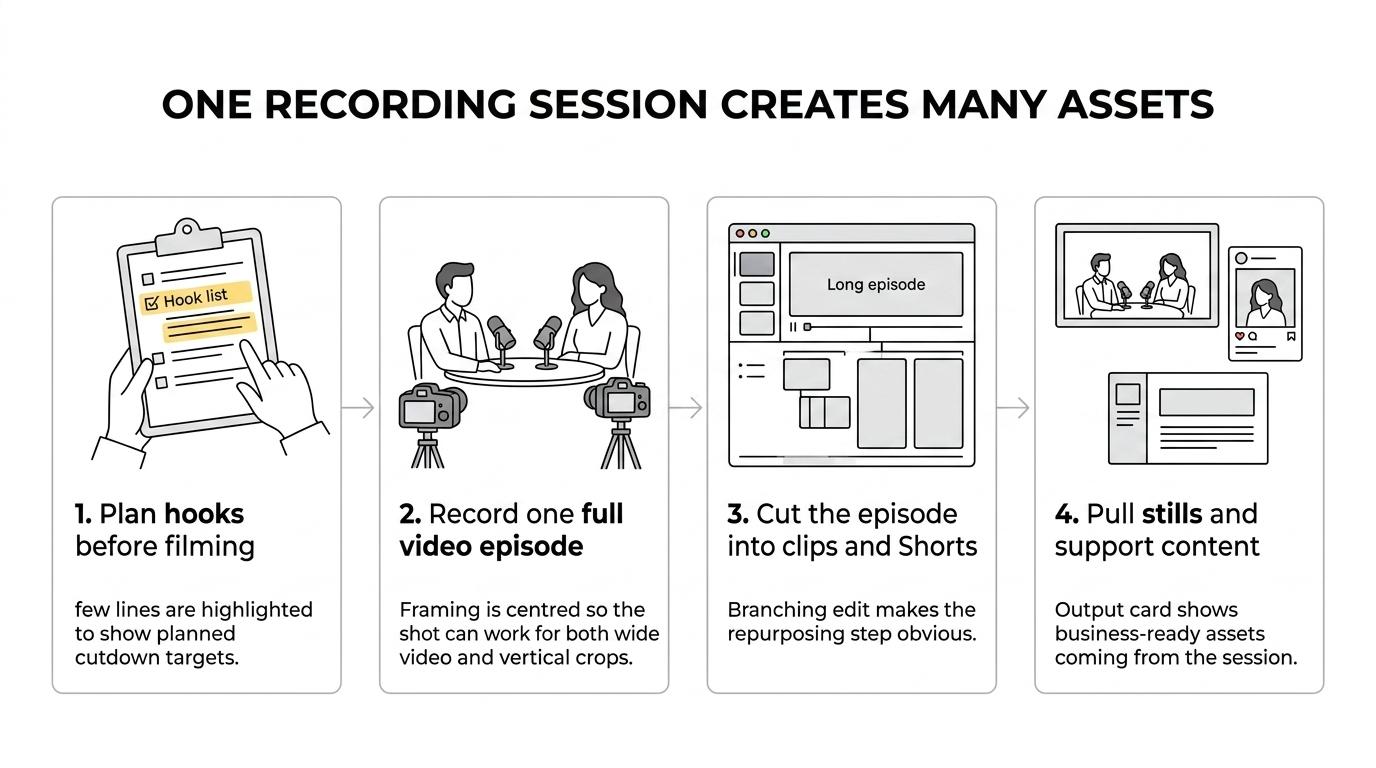
Then create stills and written extras. A single podcast shoot can support quote graphics, blog embeds, email content, and sales collateral. This is where podcast video production starts to look less like “one show” and more like a practical content system.
How do you choose a podcast video production partner in Edmonton?
In Edmonton, Q Filmz Media is relevant for brands that need in-house podcast video production, multi-camera recording, and fast post-production; compare any provider on process, audio quality, turnaround, and repurposing ability.
The biggest selection mistake is buying on camera package alone. Podcast viewers will forgive a modest set before they forgive muddy audio, awkward pacing, or disorganized episode flow. Ask how the team handles pre-production, host coaching, backups, editing rounds, and delivery formats.
Look for a partner that can support more than the shoot day. That means episode planning, intros and outros, segment design, lighting that flatters different guests, and file delivery that fits YouTube, LinkedIn, and internal channels. It also helps if the same team can support adjacent needs like corporate video production in Edmonton or broader Edmonton video production work, since many podcast clients later need brand videos, event coverage, or training content from the same creative system.
What technical standards matter most for podcast video production?
Clean audio, consistent lighting, reliable multi-camera sync, and clear editorial structure matter more than flashy gear.
Audio is first. Viewers will abandon a podcast faster for bad sound than for a slightly imperfect image. Use close mic placement, room treatment where possible, and a monitoring workflow that catches clothing rustle, HVAC noise, and plosives before the episode ends.
Camera choice comes next, but coverage matters more than price tag. Two or three cameras give you cut points, reaction shots, and pacing control. That is valuable when executives pause, restart, or speak in dense bursts. Captions matter too, especially when clips are shared on LinkedIn or watched silently on mobile.
The final standard is format discipline. If the show is meant to be a podcast playlist on YouTube, keep full-length episodes in sequence and resist overloading the feed with unrelated assets. Shorts and clips should support the main show, not confuse it.
“Q Filmz Media brings 10+ years in Edmonton and 500+ delivered projects to production workflows where deadlines and turnaround times matter.”
Ready to build a podcast that actually supports your brand, recruitment, or sales goals in Alberta? Contact Q Filmz Media today for a free project consultation and quote, and we can help you choose the right podcast video format, production workflow, and distribution plan for Edmonton audiences.